Understand the cut being sold
A whole brisket may include a flatter section and a thicker section with different grain directions, while stores also sell individual portions. Ask which cut you are buying and whether it has already been heavily trimmed. A small lean flat cannot be approached with exactly the same expectations as a large whole brisket retaining more of its exterior fat.
Choose a piece that fits comfortably in the indirect zone without being squeezed against the cooker wall. Thin ends projecting over intense heat will dry sooner. Examine the shape before trimming, removing unusually thick hard fat and loose edges as needed. The surface does not need to be stripped bare, but a very thick external fat cap is not a guarantee against poor temperature control either.
Think in cooking phases rather than deadlines
Start with fully thawed, refrigerated meat and prepare a suitable cooker for controlled indirect heat. USDA hot-smoking guidance for meat and poultry specifies a chamber range of 225–300°F. Select a setting appropriate to your method and measure near the food rather than relying solely on a lid reading. The cooler or hotter area immediately around the brisket affects the actual cook.
The first phase develops the exterior. Later, internal temperature may rise much more slowly, which does not automatically indicate equipment failure. Wrapping after the desired crust has formed can change the remaining cooking process but also softens that exterior. Base the choice on color, texture and temperature behavior, not on an assumed wrapping hour that supposedly applies to every brisket.
An oven can provide a useful continuation once enough smoke flavor is present if the outdoor cooker cannot reliably maintain heat. Transfer without a long lukewarm interruption. Do not partially cook a brisket, leave it standing overnight and assume finishing the next morning will correct the handling problem. A backup plan is about maintaining a safe process, not creating an uncontrolled pause.
Coordinate tenderness, resting and slicing
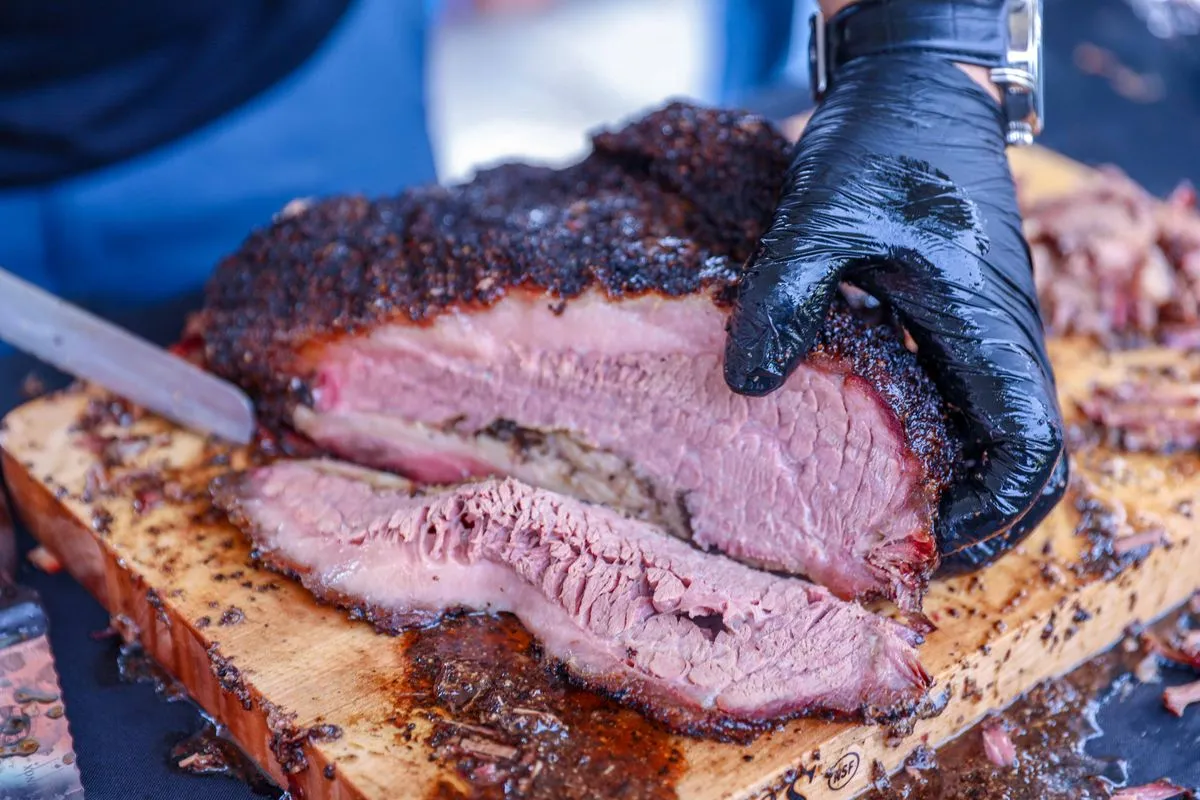
A safe minimum internal temperature and tender brisket are different targets. USDA guidance for whole beef roasts is at least 145°F followed by a three-minute rest. Brisket intended to be tender usually cooks much further, often into a range around 195–205°F. Probe several areas for low resistance; one soft section does not establish that the flatter or thicker section has reached an equally useful texture.
Any rest must fit into safe temperature-controlled holding or prompt refrigeration. Leaving a roast in an insulated box for an unspecified number of hours is not a guaranteed method. At serving time, slice across the grain of each section, changing direction when the muscle grain changes. Cut only the portions needed initially. For leftovers, smaller shallow containers and timely refrigeration are easier to manage than a large warm platter that remains on the table throughout the evening.
Use grilling equipment only in its intended location and follow the manufacturer’s instructions. Timing is not a substitute for checking doneness.