Let the fire end in its proper place
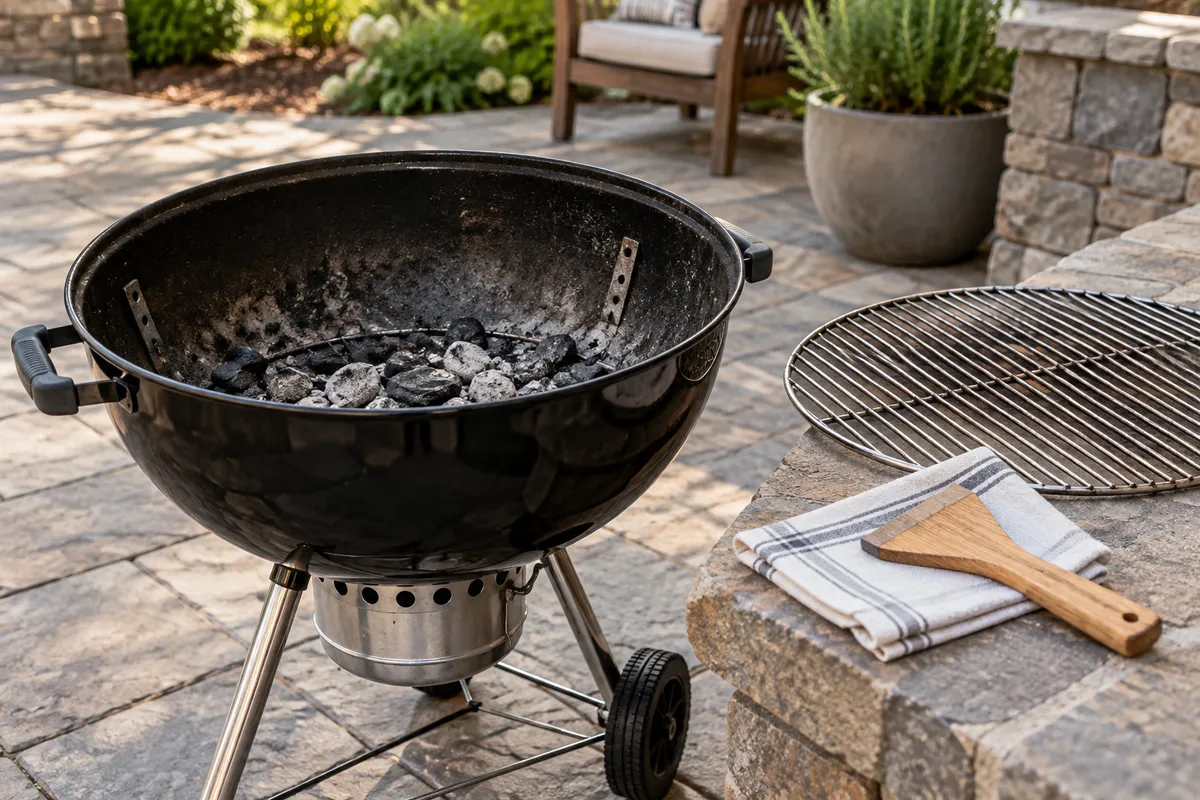
Extinguish the charcoal according to your grill's instructions. Many enclosed charcoal cookers use reduced airflow to put the fire out, but the correct procedure depends on the model. Keep the appliance in its safe outdoor location throughout cooling. A grill with no visible flame still does not belong in a garage, shed or house, where combustion gases can accumulate.
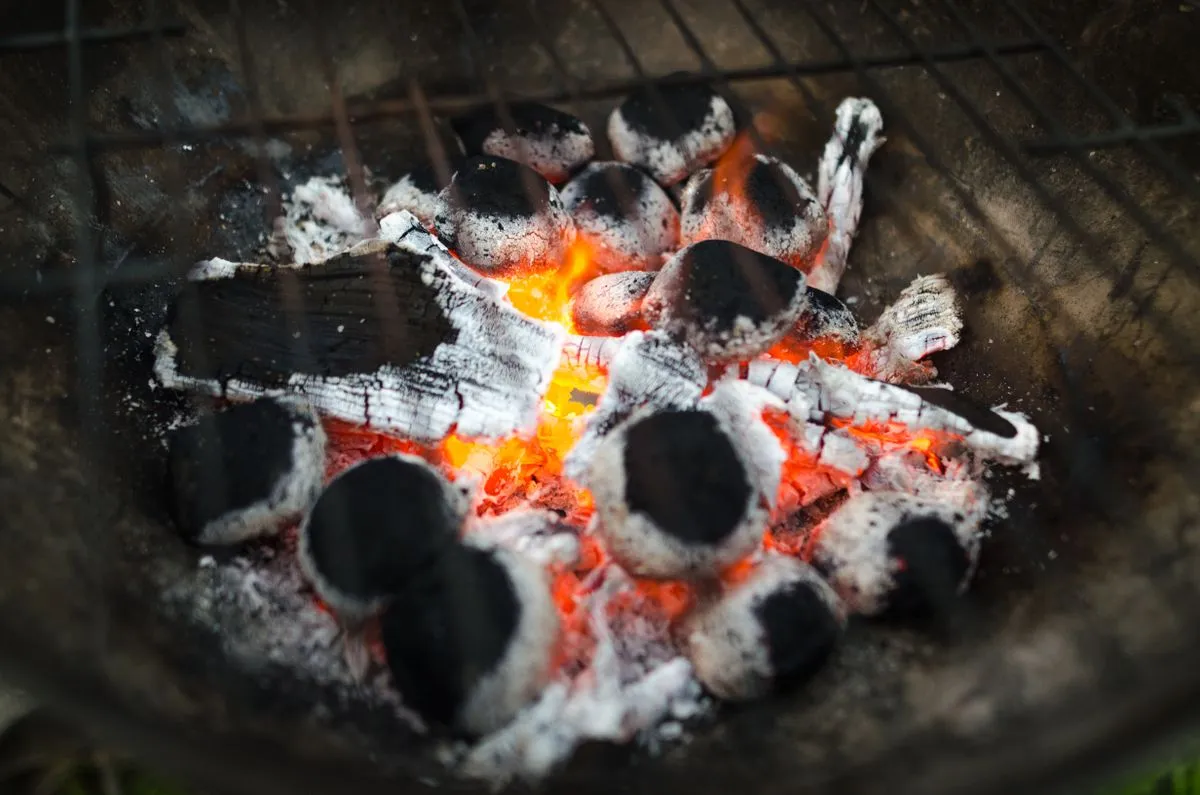
Allow ample time rather than relying on a universal number of hours. Large lumps of fuel, a deep ash bed and sheltered pockets can retain heat long after the outside looks harmless. Do not reach into ash with bare hands to test it. Keep children and pets away, and resist moving a hot cooker through an indoor space simply to finish putting the patio in order.
Transfer gently into a suitable container
Remove ash only when it is fully extinguished and cool. Use a suitable metal tool and a noncombustible container with a lid. Place the container on a noncombustible surface away from timber, paper and trash bags. Metal can conduct heat into decking below it, so a container is not safe merely because its sides are sturdy and it is unlikely to tip over.
Transfer small amounts slowly to avoid throwing dust into the air. Do not carry an open ash pan above food or clean outdoor furniture in windy conditions. An ordinary household vacuum is not suitable for ash. Even a product sold as an ash vacuum must be used within its instructions; the label is not permission to collect live embers or hot fuel. Keep electrical equipment clear until the material is appropriately cool.
Check local disposal rules
Ask your local waste authority how to dispose of barbecue ash. Fully cold charcoal ash commonly goes into ordinary waste, but local requirements determine the correct route. Do not assume it belongs in compost or should be spread on garden beds. Briquettes, fire starters, food drippings and residues do not form a measured fertilizer, and even plain wood ash can be unsuitable for particular soil or plants.
Clear deposits around the air openings during cleaning so airflow remains controllable next time. Check that a removable ash catcher is correctly secured before adding fresh fuel. Completely extinguished reusable charcoal may be kept separately in dry, safe storage if the cooker instructions allow that practice. The useful habit is to treat the cooling and disposal stage as part of operating the fire, rather than as an unimportant job after cooking has finished.
Use grilling equipment only in its intended location and follow the manufacturer’s instructions. Timing is not a substitute for checking doneness.