Measure food and chamber separately
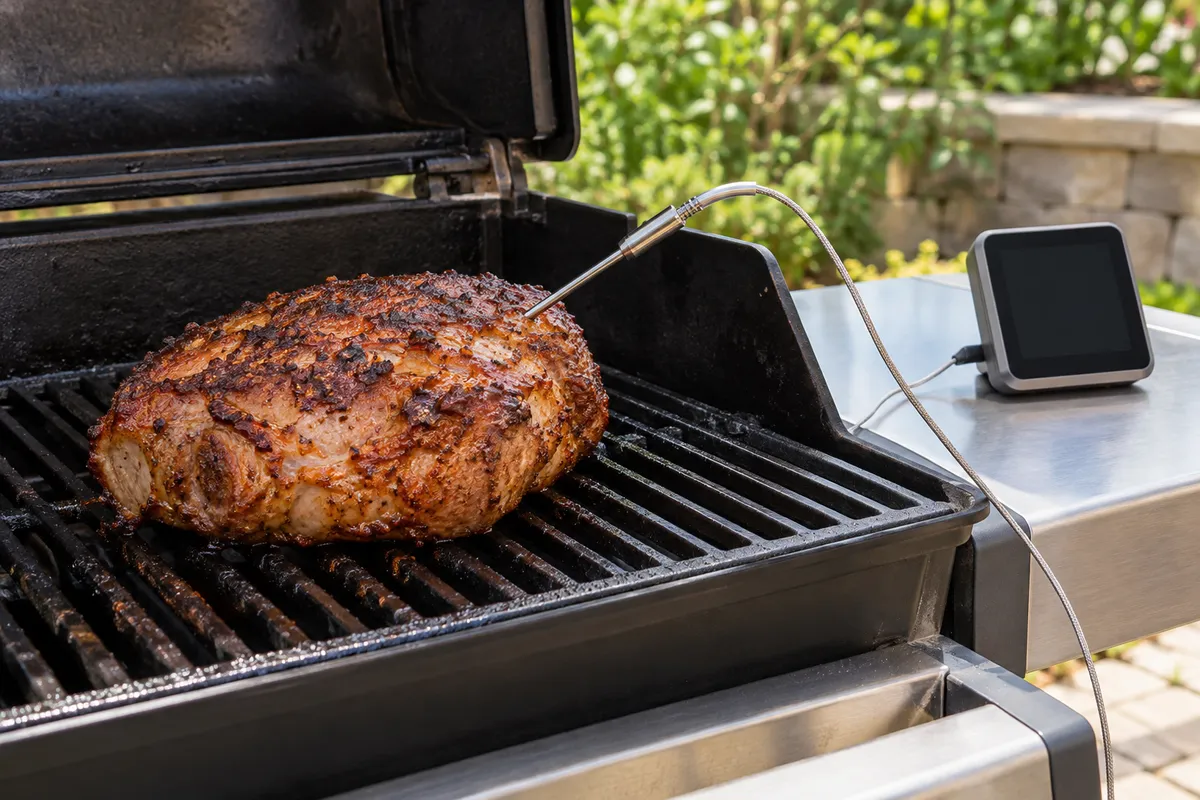
A probe in meat describes its immediate internal surroundings. A second suitable chamber probe measures air near the food. Those readings can differ considerably. Watching the lid dial alone does not establish conditions beside the roast, while monitoring only the center may miss a cooking chamber that is becoming too hot or losing heat.
Place the food probe in a relevant thick area, away from bone, substantial fat pockets and metal skewers. A chamber clip can keep its sensor from resting directly on the grate. Follow the product's intended use: a probe specifically designed for liquid measurements does not become a grill probe merely because its connector fits.
Respect every component's limits
Read separate temperature limits for the tip, cable and junction. A heat-resistant sensing stem may have a lead that cannot tolerate flames. Route cables through the intended opening without pinching them in the lid or dragging them across sharp edges. Keep the display outside excessive heat and protect it according to its stated moisture resistance.
Wireless probes may require a minimum insertion depth and have a separate limit for exposed ambient temperature. Incorrect positioning can expose sensitive sections to more heat than intended. Check whether a final direct sear is permitted; removal beforehand may be necessary. No connection technology is automatically suitable for every cooking configuration.
Treat alerts as prompts
Choose alarm limits deliberately and confirm that the connection is active. A lost signal can otherwise resemble an unchanged reading. Test range and battery condition with the cold setup before starting a long cook. An app does not remove the need to supervise the appliance and follow its safe operating instructions.
When the target alert sounds, verify with a clean instant-read thermometer in additional relevant locations. Even a carefully positioned permanent probe can miss a colder area. Clean the probe afterward as directed and protect cables from tight bends. Repeated jumping or implausible readings need investigation, not an arbitrary numerical correction added to every future measurement.
Use grilling equipment only in its intended location and follow the manufacturer’s instructions. Timing is not a substitute for checking doneness.