Cook similar racks together
Choose two racks of similar thickness so they are likely to finish within a comparable window. Trim loose flaps that would dry out quickly and remove a tough membrane on the bone side if needed. A butcher can help if that preparation is unfamiliar. Thin racks and heavily meaty cuts require different attention rather than simply sharing one assumed cooking time.
The seasoning uses little sweetness. Add sugary sauce late so it does not blacken over a long cook. Consider the combined salt in rub and sauce before seasoning. If substituting a salty commercial rub, reduce the separate salt rather than layering both full amounts on the same surface. Sauce is optional, not a requirement for ribs to taste complete.
Tender does not have to mean falling apart
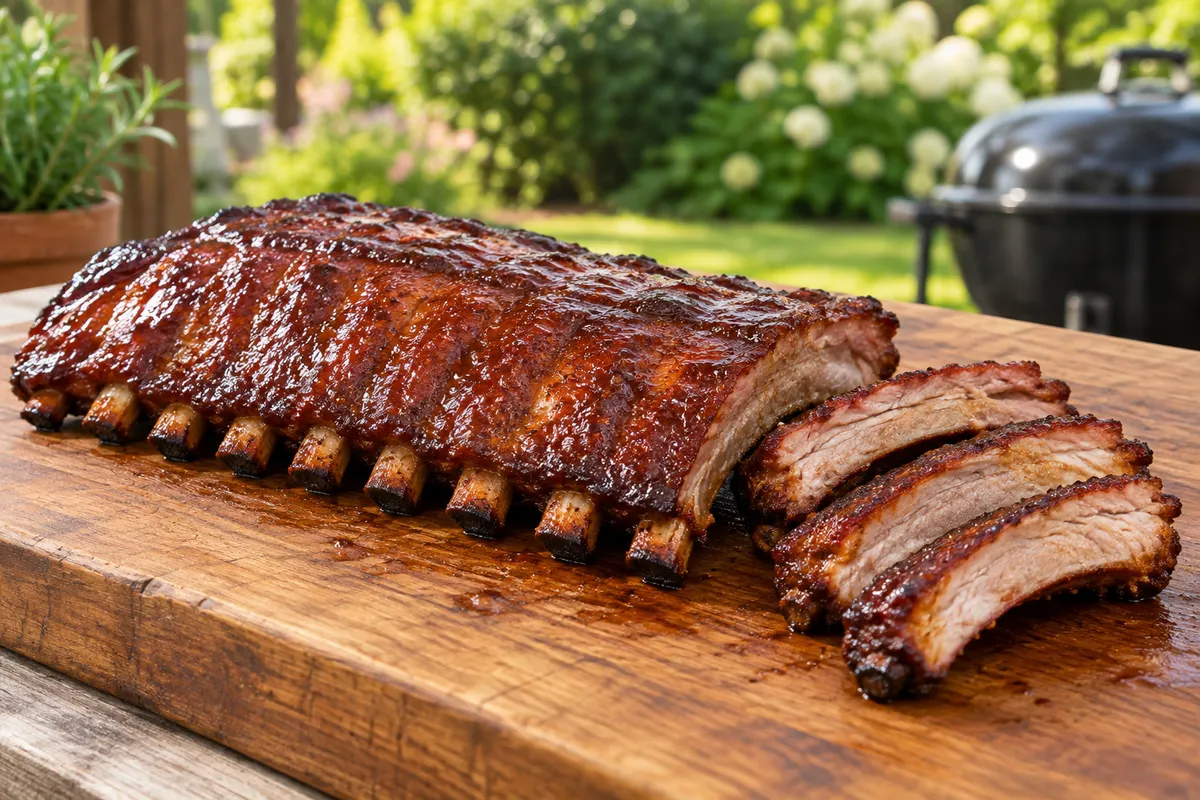
Ribs should be comfortable to eat but do not need to collapse completely when lifted. Once the exterior has the color you want, optional wrapping can change the remaining cook and soften the crust. It is a texture choice, not a mandatory stage in a universal three-part timetable. Unwrapped cooking can also work if heat and moisture loss remain controlled.
Check meat between the bones with a suitable thin probe, avoiding direct bone contact. Use a gentle tenderness check alongside the temperature reading. The desired rib texture commonly develops well beyond the safe minimum temperature. Meat pulling back from a bone indicates change, but by itself cannot prove that all portions are safely and pleasantly cooked.
The recipe
4 servings
Ingredients
- 2 pork rib racks, about 3½–4½ lb /1.6–2 kg total
- 2 tsp neutral oil
- 2 tsp sweet paprika
- 1½ tsp fine salt
- 1 tsp black pepper
- 1 tsp garlic powder
- ¼ cup barbecue sauce, optional
- Suitable mild smoking wood
Method
- Prepare the chilled racks, trimming loose edges and patting dry. Spread a thin film of oil and the combined dry seasonings on both sides.
- Set a suitable cooker for indirect heat at 260–285°F /125–140°C. Use an appropriate drip pan and measure chamber temperature near the meat.
- Place racks with room between them and add a small initial quantity of wood as the equipment instructions permit. Avoid constantly opening the lid or adding wood.
- Assess color and texture after roughly two and a half hours. Depending on thickness, total cooking may take three to five hours or longer. If wrapping, use appropriate oven-safe material and continue without interruption.
- Whole-cut pork must reach at least 145°F with a three-minute rest, but ribs normally need further cooking for tenderness. Continue until a probe enters between bones with little resistance and the rack bends readily when supported safely.
- If using sauce, brush it on thinly for the final 15–20 minutes. Rest briefly, cut between bones and serve promptly.
Storage
Divide leftovers into smaller portions and refrigerate within two hours, or one hour above 90°F. Keep at 40°F or colder and use in three to four days. Reheat covered with a little liquid until every portion reaches 165°F.
Use grilling equipment only in its intended location and follow the manufacturer’s instructions. Timing is not a substitute for checking doneness.