Choose a manageable first roast
A compact boneless piece that fits comfortably in the indirect zone is easier to manage than the largest shoulder available. Trim only very thick exterior fat and loose edges. The surface does not need to be stripped completely bare. The seasoning here is deliberately restrained so smoke does not have to compete with an intensely sweet crust.
Allow several hours of flexibility. Depending on shape and chamber conditions, a roast this size may need roughly five to eight hours or longer. Time is not a doneness test. Prepare slaw and rolls separately, and have an appropriate preheated oven available to continue cooking without a long interruption if the outdoor cooker cannot maintain its temperature.
Tenderness goes beyond minimum doneness
Safe minimum cooking and pullable texture are different goals. Pork can be safely cooked yet still too firm to shred. A shoulder for pulled pork often reaches an internal range around 195–205°F before the texture is ready. Check several points for little resistance when a probe enters; one temperature reading cannot guarantee that every section has softened equally.
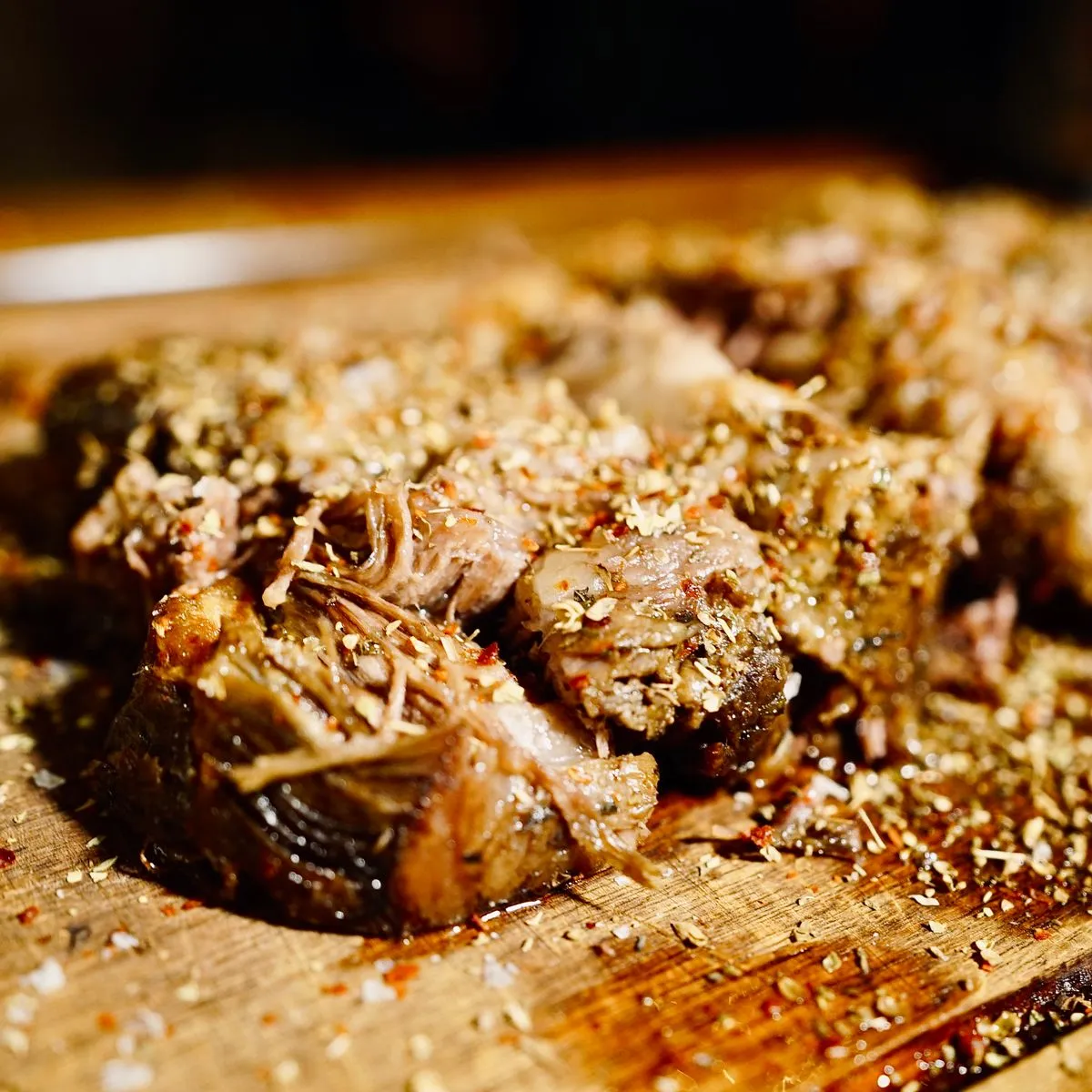
A short rest after cooking is useful, but it is not an invitation to hold the roast without temperature control for hours. Pull the amount being served immediately. Collect clean cooking juices, skim excess fat and mix a little juice back into the meat. Offer extra sauce separately so guests can still taste the seasoning and measured smoke underneath.
The recipe
About 6 servings
Ingredients
- 4 lb / 1.8 kg boneless pork shoulder
- 12 g fine salt, about 2 tsp depending on grain
- 2 tsp sweet paprika
- 1 tsp black pepper
- 1 tsp garlic powder
- 1 tbsp neutral oil
- Food-smoking wood suitable for your cooker
Method
- Fully thaw the pork in the refrigerator if needed. Pat dry, trim very thick exterior fat modestly and rub with the oil and combined seasonings. Keep refrigerated until cooking.
- Prepare a suitable cooker for indirect heat at 250–275°F / 120–135°C. Fit an appropriate drip pan and measure chamber temperature near the food.
- Put the shoulder in the indirect zone and add a small amount of smoking wood as the equipment instructions permit. Keep the lid closed as much as practical and refuel safely when required.
- Once the desired crust forms, optional wrapping in suitable oven-safe material can help the remaining cook, if compatible with the equipment. Continue without a long interruption.
- The USDA minimum for a whole pork roast is 145°F with a three-minute rest. For pulling, continue well beyond that minimum and begin checking tenderness around 195°F; a probe should enter several parts with little resistance.
- Rest about 20 minutes in a clean protected place, then pull with clean forks and serve. Any longer hot holding must remain temperature-controlled at 140°F or above.
Storage
Refrigerate small shallow portions within two hours, or one hour above 90°F. Keep at 40°F or colder and use within three to four days, or freeze earlier. Reheat leftovers throughout to 165°F, adding a little water or unsalted cooking liquid if needed.
Use grilling equipment only in its intended location and follow the manufacturer’s instructions. Timing is not a substitute for checking doneness.