Dry the surface instead of marinating
Choose shucked scallops of similar size and remove any tough little side muscle still attached. Let very wet scallops drain on paper towels and blot carefully, but do not leave them sitting unrefrigerated. Wet marinades would delay browning. Small scallops suit a pan better than an open grate. A browned outside does not tell you about the center: this recipe cooks the flesh through rather than serving a raw middle.
Remove the small firm side muscle from each scallop if it is still attached, then dry the scallops individually. Excess surface water encourages steaming instead of browning. Spoon a little herb oil over the finished scallops rather than flooding the plate, which would obscure their mild natural sweetness. Keep raw ingredients refrigerated; clean hands, utensils and surfaces after contact, and use fresh plates for cooked food.
Do not fill the griddle with too many scallops at once. A sharp drop in surface heat encourages liquid to collect, steaming the underside rather than browning it. Two small batches offer more control than one crowded batch. Still, avoid holding the first batch in a hot oven for a long wait; serve it promptly as a small starter and bring the next portion out freshly cooked.
The recipe
Serves 4
Ingredients
- 1⅓ lb / 600 g shucked scallops
- 1 tbsp canola oil
- ¼ tsp fine salt
- ¼ tsp black pepper
- 2 tbsp olive oil
- 1 tbsp chopped parsley
- 1 tsp sliced chives
- 1 tsp lemon juice
Method
- Inspect scallops, remove side muscles and pat dry. Mix olive oil with parsley, chives and lemon juice and set aside. Season scallops with salt and pepper immediately before cooking.
- Preheat an outdoor grill for medium heat, with a direct cooking area and a separate unheated zone. Clean the grate before adding food. Keep the cooler side clear so pieces can finish gently or move away from any flare-up.
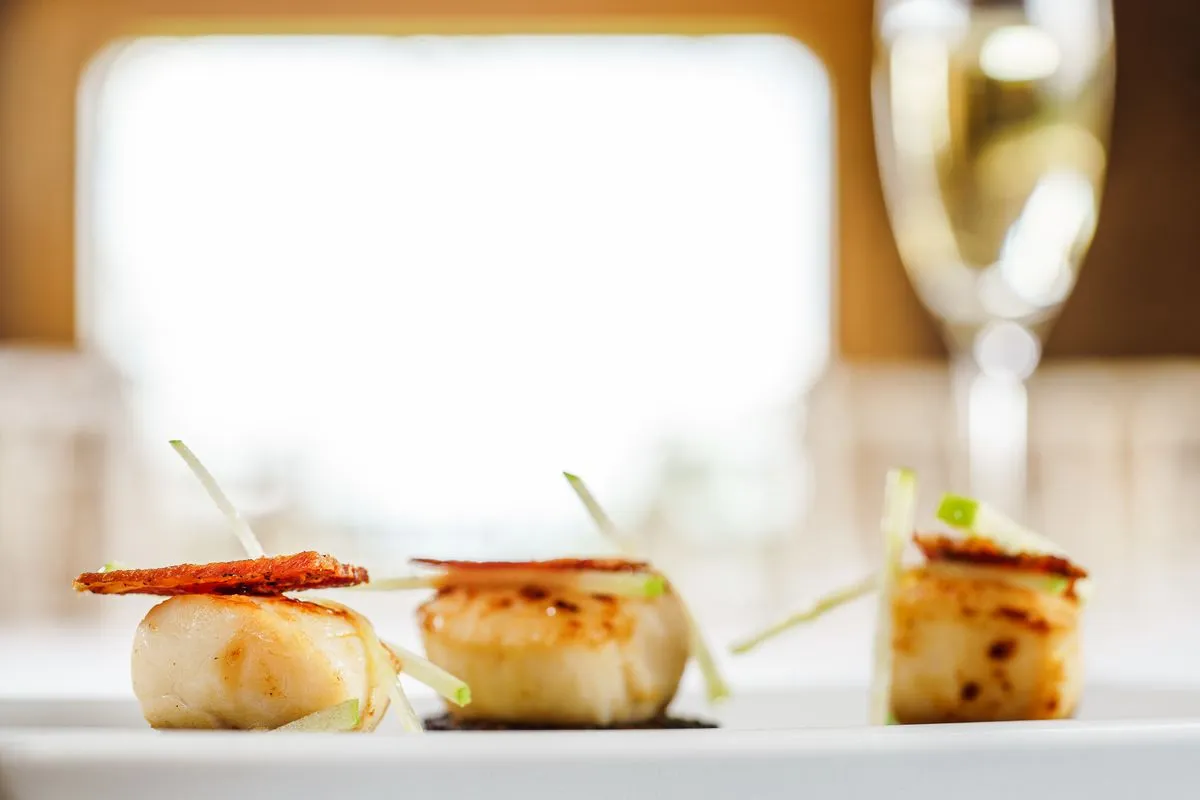
- Preheat a griddle thoroughly and brush with canola oil. Add scallops with space between them and let brown undisturbed for about 2–3 minutes. Turn and cook another 2–4 minutes, depending on size, until fully cooked.
- Cook until the flesh is pearly or white and opaque throughout, with no translucent center. Check a thick piece rather than judging only its browned exterior; the short suggested cooking time is an estimate.
- Check the thickest pieces. Transfer with a clean spatula to warm plates and drizzle lightly with herb oil. Serve at once; extended hot holding makes the texture increasingly firm and rubbery.
Storage
Refrigerate leftovers promptly in shallow containers, within two hours or within one hour above 90°F / 32°C. Keep at 40°F / 4°C or colder and use within three to four days. Reheat only the portion needed to 165°F / 74°C throughout; discard food left out beyond those limits.
Use grilling equipment only in its intended location and follow the manufacturer’s instructions. Timing is not a substitute for checking doneness.