Choose between shallow contact and deep capacity
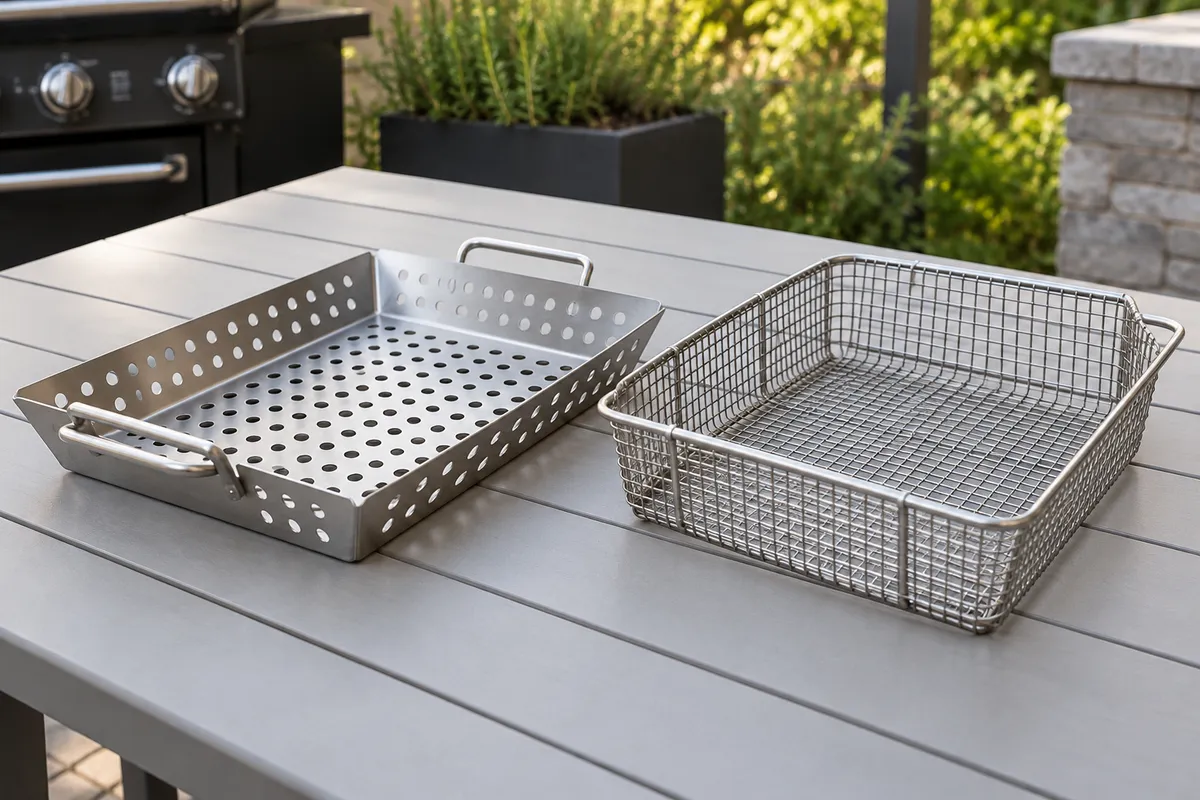
A broad, shallow design encourages a thin layer. That improves access to the hot base and makes browning easier to distribute. A deeper basket contains more volume but invites overfilling. Moisture trapped between stacked pieces produces a different result from a loose layer with exposed surfaces.
Match hole size to the cuts you actually make. Tiny diced onion needs different support from substantial pepper strips. Small perforations can demand more cleaning effort, while large openings let short or slender pieces escape. For very fine vegetables, a compatible solid plate may be more useful than covering every hole with improvised foil.
Include the handles in the footprint
Measure the basket with its handles and check clearance beneath the closed lid. A long handle can strike a side wall or prevent closure. Detachable handles have their own fastening and heat restrictions. The basket must sit securely without blocking essential airflow or the intended grease drainage system.
Try gripping it with suitable gloves in a cold setup. A full basket weighs considerably more than the empty display item. Have a heatproof landing area, not merely spare room on a plastic shelf. Plan how the cooked vegetables will transfer to a clean serving dish so the hot accessory does not become an awkward obstacle at the last moment.
Be realistic about cleaning
Bare stainless steel and coated products tolerate different scrapers and cleaning methods. Read the instructions and inspect access to corners and folded edges. An accessory that traps residue beyond easy reach can become tiresome after every cook. Do not conceal damaged coating by scraping harder or layering something over it.
A moderate basket that fits well may be more flexible in two batches than a huge one that occupies the whole grill. Choose around ordinary meals, not theoretical maximum servings. The basket assists handling small pieces; managing heat, load depth and tenderness remains part of the cooking process rather than a feature the accessory performs automatically.
Use grilling equipment only in its intended location and follow the manufacturer’s instructions. Timing is not a substitute for checking doneness.