Keep electronics out of the wash
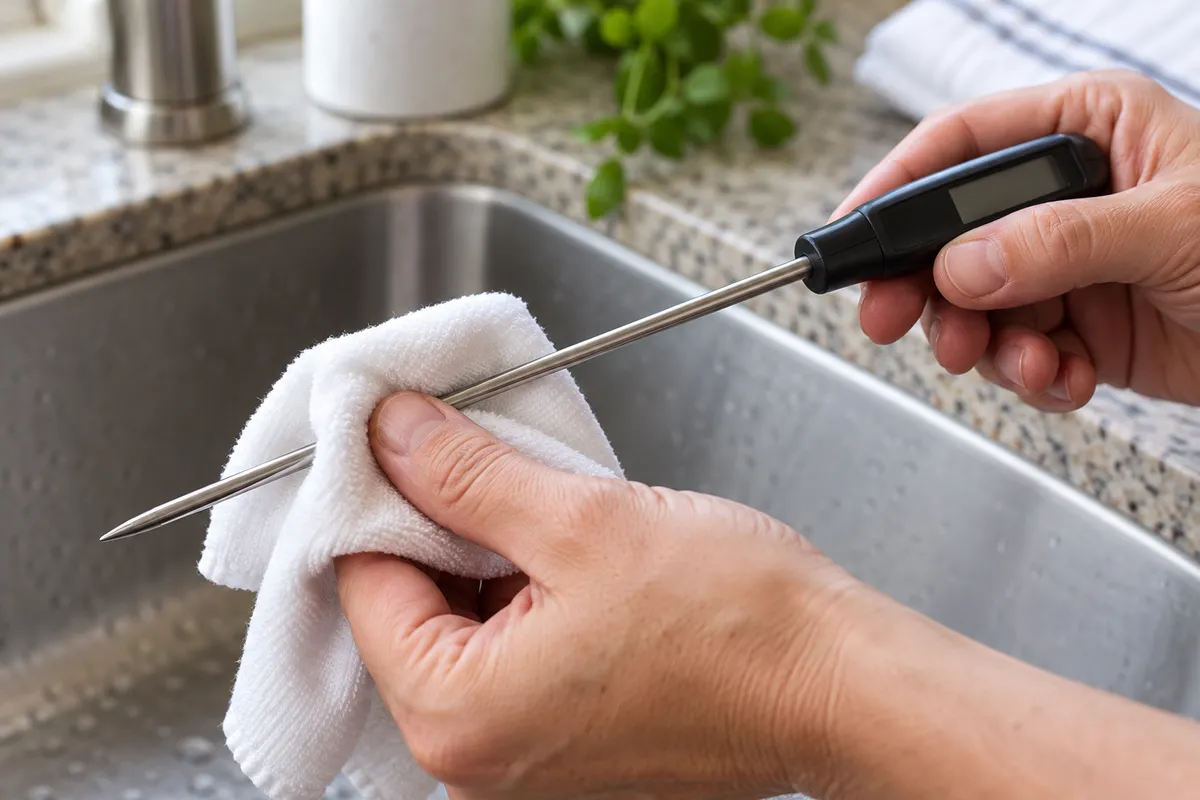
Check which components are water-resistant before cleaning. The metal probe may be washable while its display, connector and cable junction must remain dry. A splash-resistance claim is not permission to soak the entire instrument. Moisture entering the joint between a probe and cable can damage the electronics or interfere with the reading even if the outside looks intact.
Remove visible grease and food particles with the mild cleaning method approved by the maker. Cleaning and sanitizing are different tasks: a dirty tip does not become hygienic simply by rubbing it against an available cloth. If a sanitizing product is used, it must be appropriate for the intended food-contact application. Follow its contact time and rinsing directions as well as the thermometer manufacturer's material restrictions.
Create a clean place between readings
Do not put the probe on a plate that held raw chicken. Set out a clean resting spot and suitable cleaning supplies before lighting the grill. After contact with raw or incompletely cooked food, clean the tip before it touches finished food again. Remember that hands and the thermometer body may also have collected marinade while you were checking several pieces in succession.
A leave-in probe may remain in the meat during cooking, but it still becomes a utensil that needs cleaning when removed. Keep its cable out of greasy trays and avoid handling it with contaminated tongs. Use appropriate heat protection for hot metal and allow the equipment to cool sufficiently before handling vulnerable connectors or the display. Pulling a hot probe out by its cable can damage the connection as well as complicate cleaning.
Dry, store and check performance
Dry cleaned components before placing them in a protective sleeve. A damp or dirty sleeve can immediately recontaminate the tip, so clean the cover according to its own instructions. Coil a cable loosely instead of bending it sharply beside the connector. Careful storage helps avoid mechanical strain on a connection that may already experience repeated heating during long cooks.
A clean tip does not guarantee an accurate reading. Check performance as the manufacturer recommends, especially after a drop, moisture exposure or unexplained jumps in temperature. Use only a suitable checking method for that instrument, and understand which part of the probe senses temperature. Hygiene, correct placement and a working display all matter; improving one cannot compensate for neglecting the other two.
Use grilling equipment only in its intended location and follow the manufacturer’s instructions. Timing is not a substitute for checking doneness.