Count cooking jobs as well as people
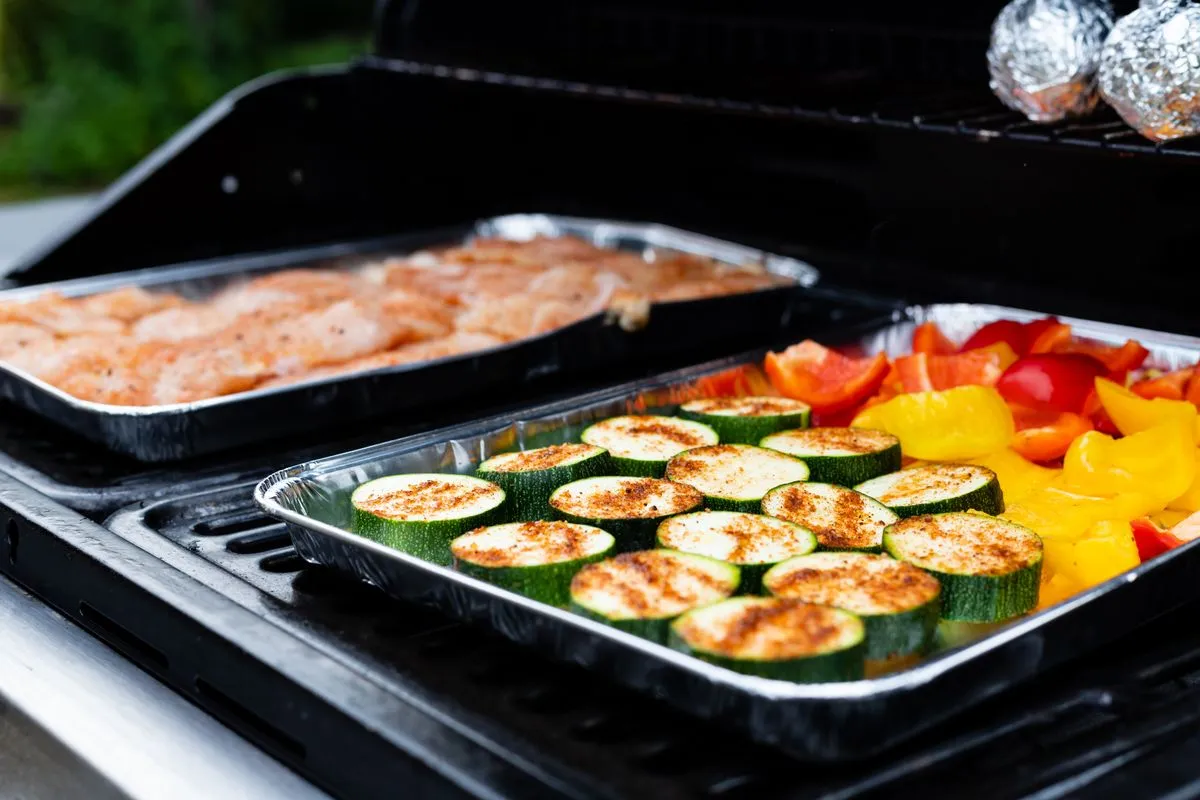
Consider the number of different tasks, not only servings. Three meats, fish, delicate vegetables and warm bread require more attention than one main dish with two cold sides. For a larger gathering, choose fewer dependable components. Ask about vegetarian preferences and allergies beforehand so separate preparation is not improvised after the grill is hot.
Decide what can be prepared ahead without losing quality. Dressing, cut vegetables and portioned raw ingredients should wait under appropriate refrigeration. Bring out only the amount needed for the next batch. A smaller supply at the working table prevents all the meat from warming while the first few rounds cook.
Manage one batch completely
Load only what you can safely monitor with your utensils and thermometer. Reserve an indirect zone for food whose surface is browned before its interior is ready. A consistent sequence helps: load, inspect, turn, measure, transfer to a clean platter. Separate raw and cooked plates are part of the workflow, not an optional convenience to remember later.
Do not plan to collect a long series of cooked batches on a merely warm platter. Serve deliberately in rounds or use controlled hot holding at 140°F or above. Explain the sequence to guests and position sides so nobody reaches through the raw preparation area. Give helpers specific roles rather than leaving several people to guess which plate or utensil is clean.
Have an ending and a backup
Keep a simple alternative available if wind or an equipment problem interrupts the cook, such as a dish prepared entirely in the kitchen. Moving the grill beneath a canopy or into a garage is not a backup plan. Safe outdoor positioning remains essential regardless of how many hungry guests are waiting.
At the end, make a deliberate decision about remaining food. Raw supplies that stayed properly refrigerated can follow their normal storage limits; food left warm for an uncertain period should not simply return to storage. Refrigerate cooked leftovers promptly in shallow containers. Perishable foods have a two-hour unrefrigerated limit, or one hour when ambient temperature exceeds 90°F. Record what was actually eaten so the next shopping list reflects the group rather than an ever-growing surplus.
Use grilling equipment only in its intended location and follow the manufacturer’s instructions. Timing is not a substitute for checking doneness.