Prepare the whole working area
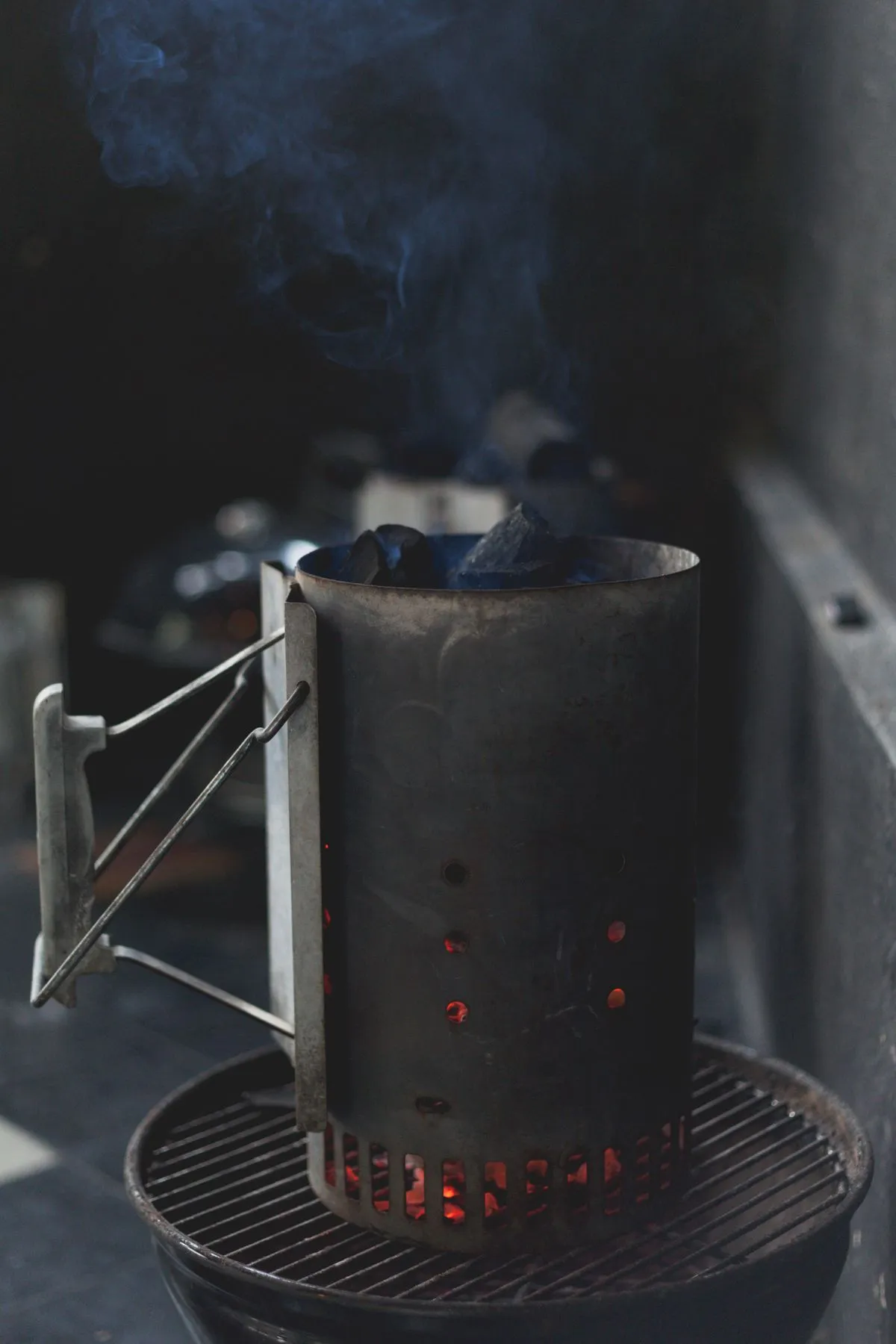
Read the starter and grill instructions together. Use the approved heat-resistant support, commonly the charcoal grate of the open grill. A wooden deck, plastic table or patch of dry grass is not a suitable base. Even paving can be damaged by concentrated heat, so do not assume that any apparently solid surface is appropriate for setting down the empty starter.
Operate outdoors with the specified clearances from combustible materials. A garage, tent, canopy or enclosed shelter is not a rain solution. Keep children and pets away, and arrange the work so nobody needs to walk through the pouring area. Have dry, suitable heat-resistant gloves and appropriate long tools ready before lighting. Gloves with visible damage or damp fabric are not dependable protection.
Match the fuel to the cook
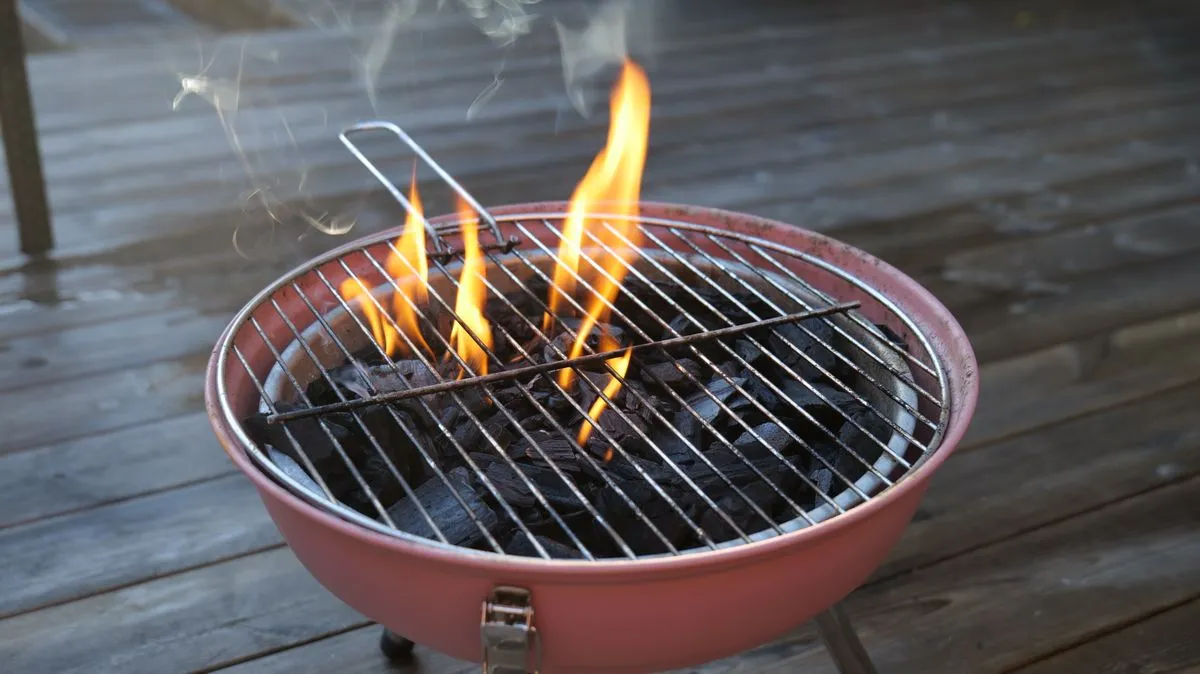
Load suitable barbecue charcoal in the amount required for the planned fire, without exceeding the product instructions. Use a recommended solid fire starter. Never add gasoline, alcohol or another liquid accelerant. Leave the lower air openings unobstructed; packing excessive paper underneath can interfere with the draft rather than helping the process. Keep spare fuel well away from the ignition area.
Elapsed minutes alone do not tell you when the load is ready. Fuel size, fill level and wind change the lighting process. Follow the readiness signs described by the maker and remain nearby at a safe distance. Do not relocate a smoking chimney toward the dining table or into shelter. If conditions become unsuitable, follow the manufacturer's safe shutdown guidance rather than carrying burning fuel around.
Pour deliberately and park safely
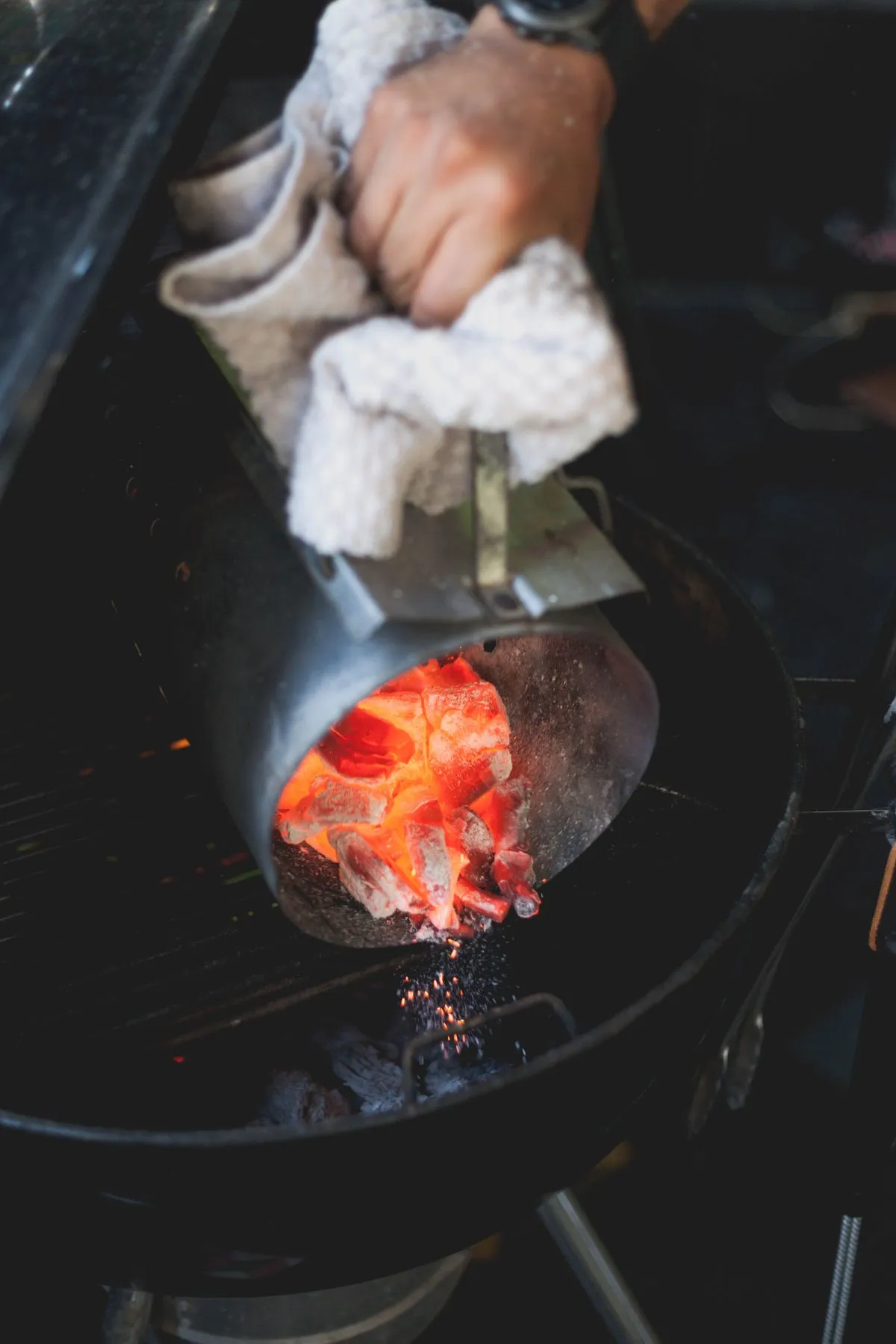
Check that the handles are accessible and the receiving area is clear. Hold the starter using its intended grip arrangement, keep your face away from the opening and pour slowly enough to prevent coals from spilling or bouncing. Place the emptied chimney on the prepared heat-resistant support, outside traffic routes. Empty does not mean cool: the metal can remain dangerous after the fuel has gone.
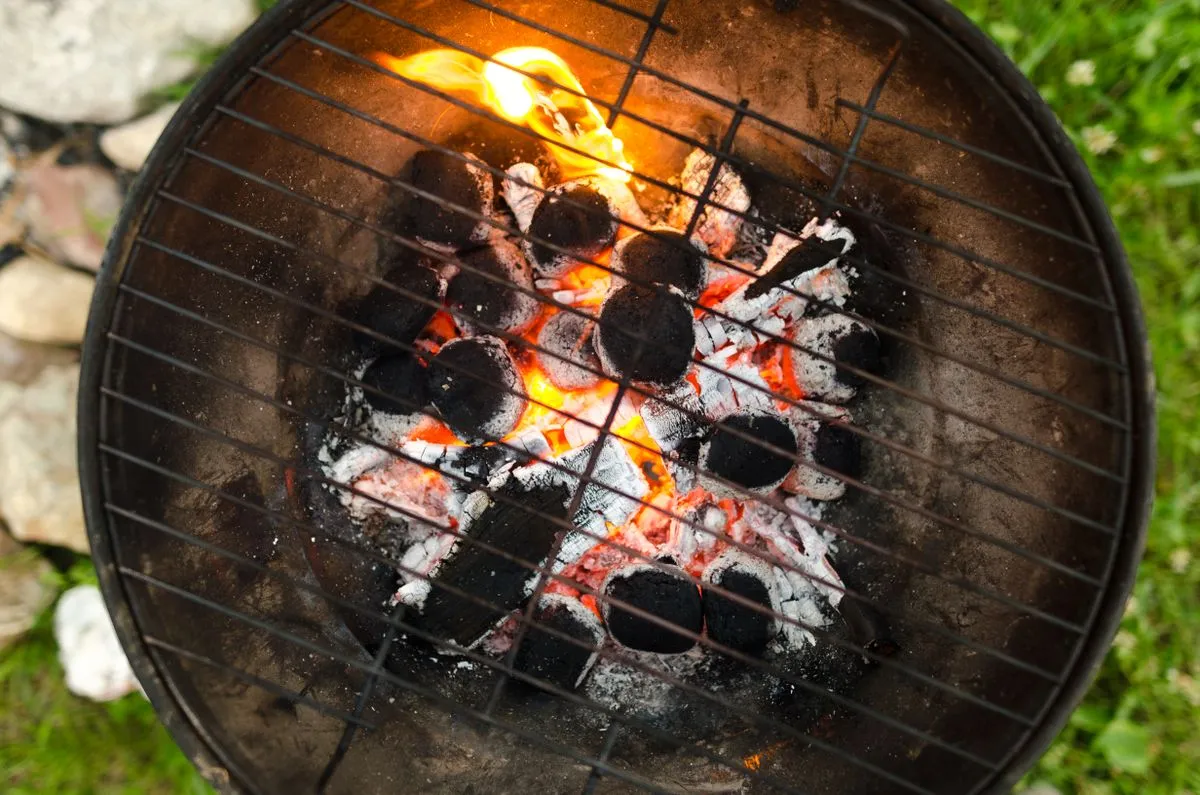
Arrange the coals with a suitable tool instead of shaking or moving the entire grill. Supervise the hot equipment until it has cooled completely. Do not put the starter straight into a cupboard, cardboard box or vehicle. Later, handle fully cooled ash according to local disposal rules, remembering that apparently quiet charcoal may still contain hidden heat.
Use grilling equipment only in its intended location and follow the manufacturer’s instructions. Timing is not a substitute for checking doneness.