Reserve space before lighting
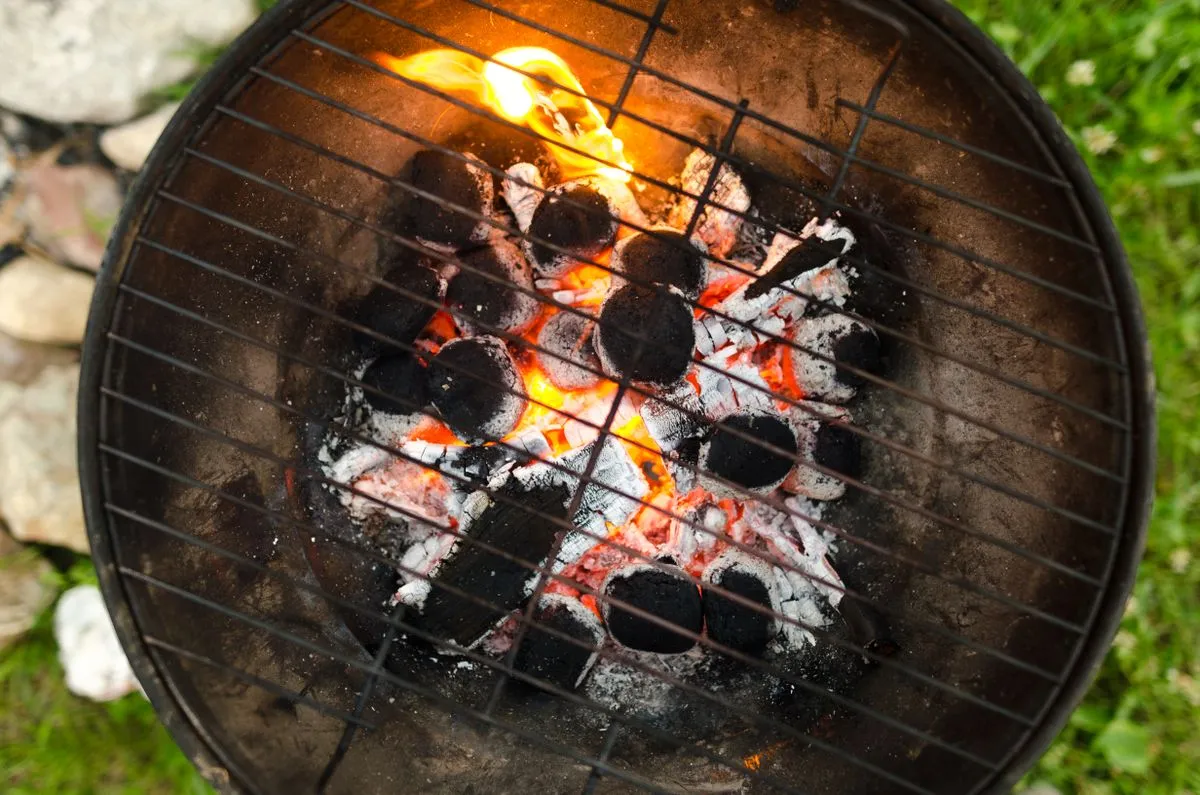
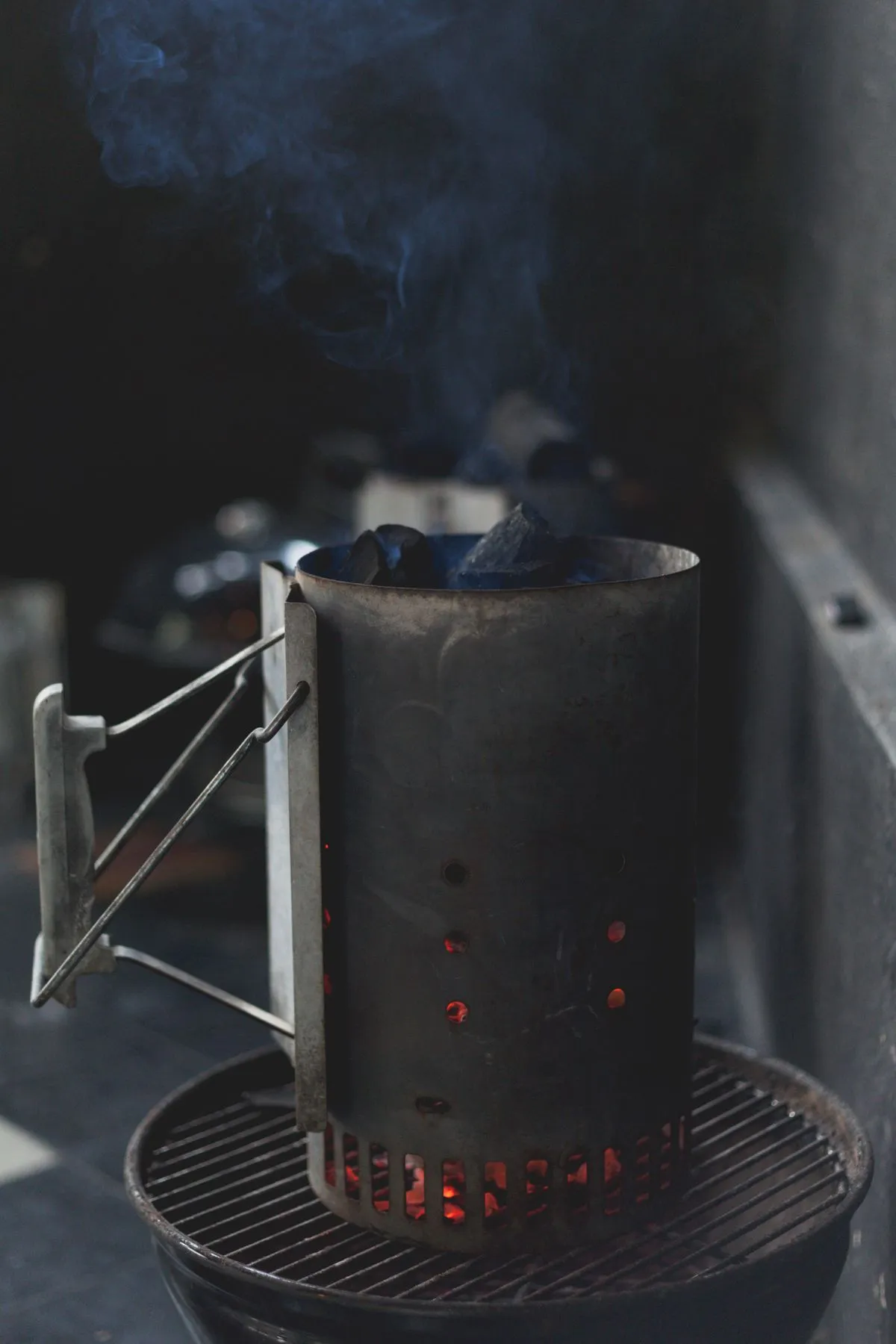
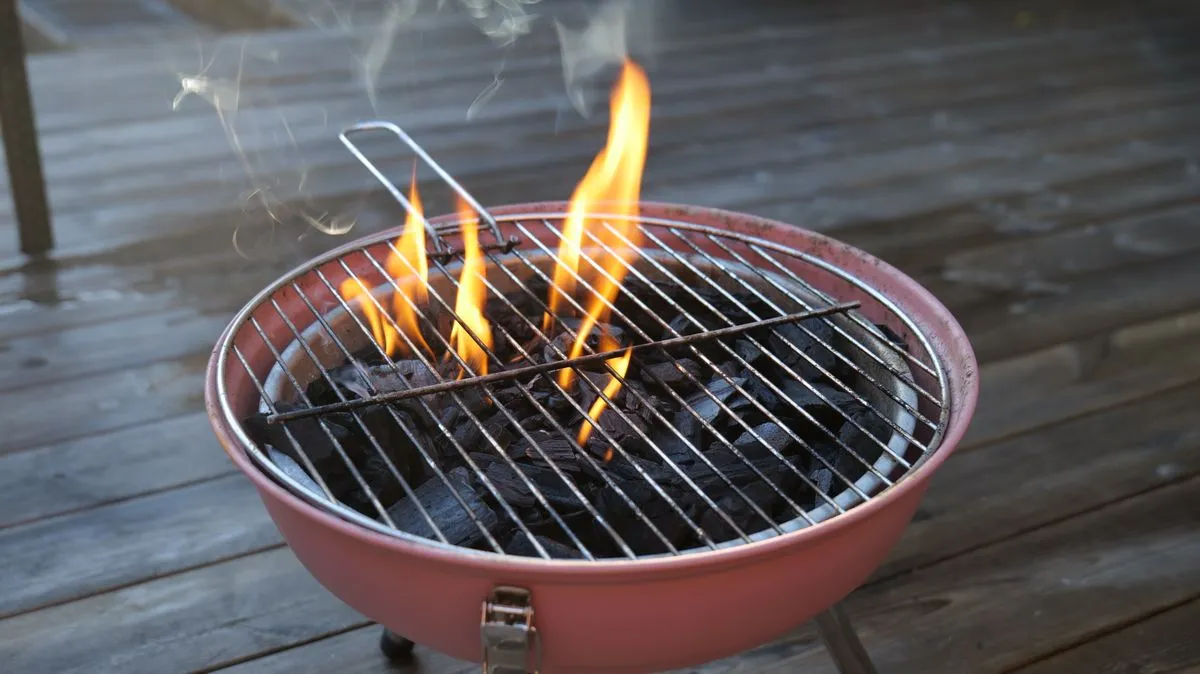
Check that your grill supports covered, indirect cooking and follow its fuel limits and outdoor clearance requirements. Choose a stable, noncombustible location before lighting anything. The quantity of charcoal depends on the cooker and the meal; a full chimney is not automatically the correct amount for every kettle. A deep pile concentrated under a small area can produce considerable direct heat.
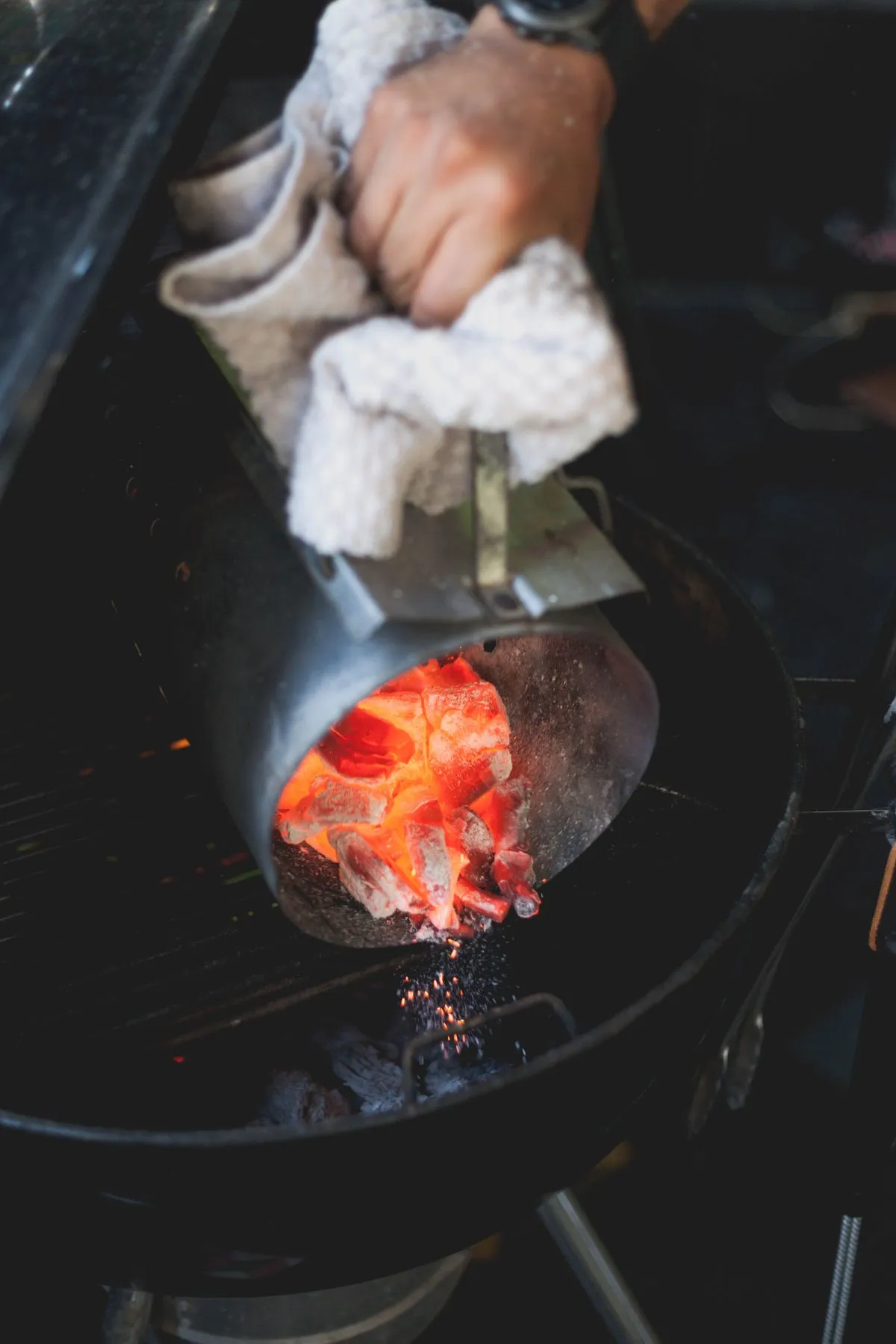
Arrange lit charcoal on one side of the charcoal grate using suitable tools and heat protection. Leave the opposite side empty. A compatible drip pan beneath the empty cooking zone can collect fat when the manufacturer permits that arrangement. Do not obstruct vents or improvise supports from components that were never designed to carry a pan. Return the cooking grate and preheat with the lid as instructed.
Give each stage a job
A thick chop can brown over the coals and finish above the empty side. Chicken pieces may benefit from the reverse sequence: cook them indirectly, then briefly improve the skin over direct heat. Neither sequence is a universal rule. Choose according to thickness, surface seasoning and the amount of browning already present. Sweet sauces usually belong near the end, away from fierce radiant heat.
The indirect side is still a cooking zone, not a cool storage area. Keep the lid down between checks and measure the food itself. For US safety guidance, whole beef, pork, lamb and veal cuts need 145°F followed by at least three minutes of rest; ground versions need 160°F, and poultry needs 165°F. A reading from the lid cannot establish whether any of these targets has been reached inside the food.
Respond without rebuilding the fire
If the surface colors too fast, move the food first. Adjust the airflow in small steps according to the grill instructions, then allow the cooker to respond. Constantly rearranging burning charcoal beneath a crowded grate creates unnecessary handling risk. When heat falls, distinguish dwindling fuel from restricted airflow before adding more charcoal; the appropriate response is not the same.
Keep the escape zone available. Covering it with every vegetable and bread roll removes the main advantage of the setup. Prepare cold sides elsewhere or cook in batches. Use a clean serving platter and separate handling tools for cooked food, and note the fuel quantity and vent positions after the meal. Those observations are more useful for the next cook than copying a timetable from a differently sized grill.
Use grilling equipment only in its intended location and follow the manufacturer’s instructions. Timing is not a substitute for checking doneness.