Prepare a dry surface
Check for remaining scales and pin bones and remove them with suitable tools. Pat the skin particularly dry. Excess surface water delays browning and makes an even crust harder to establish. Keep fish refrigerated during preparation and bring out only the portions that are about to go onto the ready cooking surface.
The grate should be clean and properly preheated for the method. Apply a little suitable oil to the food rather than leaving it dripping. A heavy sweet marinade is poorly suited to the initial skin-crisping stage. Fresh herbs, butter or lemon can be added to the flesh side later or used as a finish after cooking.
Begin with the skin against the grate
Place the fillet skin-side down in the appropriate zone and let it settle rather than immediately sliding it around. Test release carefully with a wide, thin turner. Do not pull up one end while the rest remains attached; that can leave the skin behind and break the delicate flesh. Broad support matters more than force.
Depending on thickness and the cooker, much of the cooking can occur on the skin side. A closed lid on a grill designed for it helps heat reach the top. That does not mean every fillet should be cooked without turning. Decide from the actual progress and surface condition, and support the whole portion as much as possible if a turn is needed.
Check doneness independently of crispness
Crisp skin does not prove that the thickest part has reached a safe temperature. USDA guidance sets 145°F for fish; check with a suitable probe in the relevant center. Do not push the sensing area through the fillet into the hot grate. A slender sensor is especially useful for a thin portion where a large instrument cannot fit correctly.
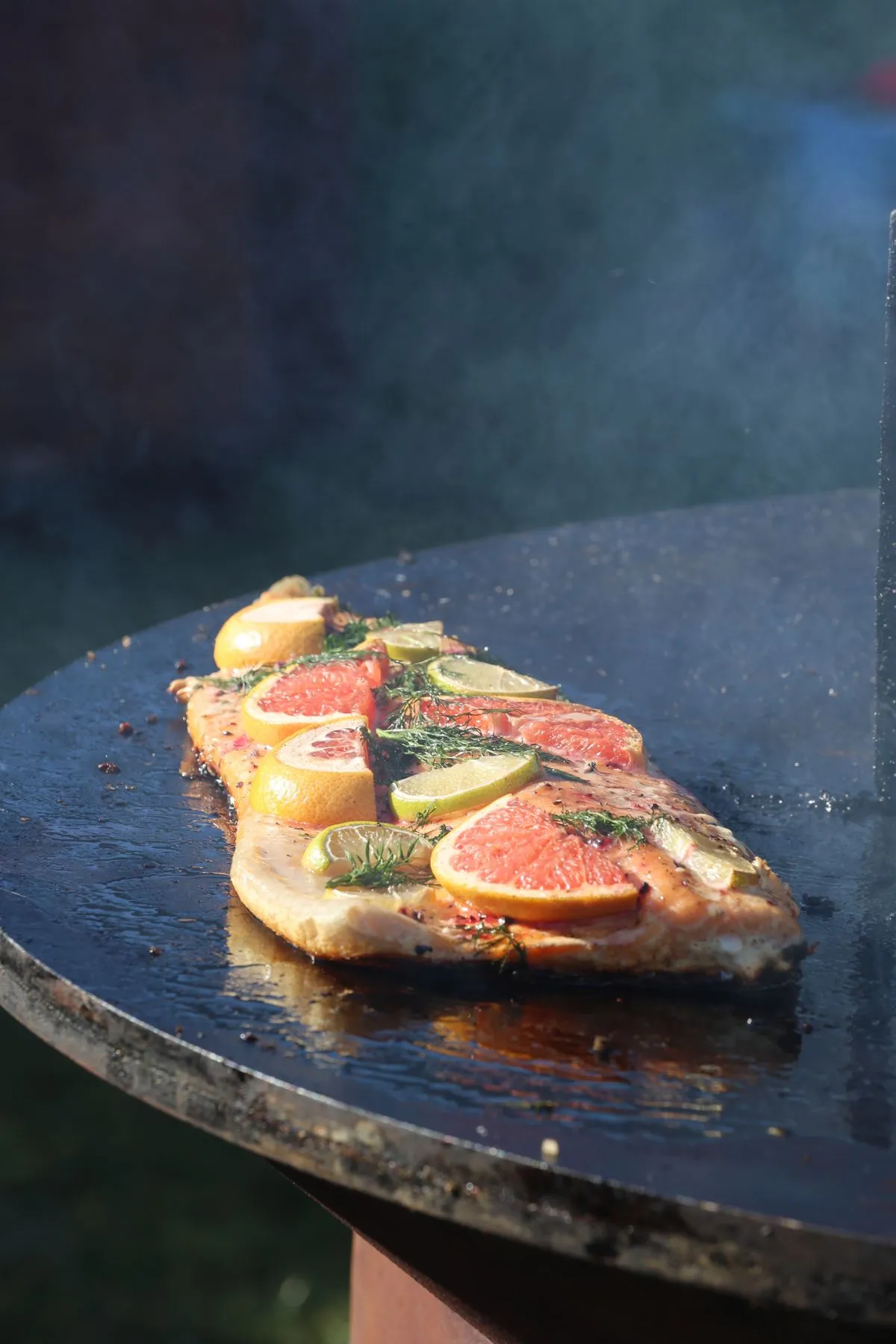
Serve skin-side up when you want to preserve crispness. A large amount of sauce poured over it softens the surface quickly, so offer the sauce alongside and have the sides ready before the fish finishes. If the skin is damaged or the fillet is exceptionally fragile, a compatible griddle may provide a more controllable alternative than insisting on direct grate contact.
Use grilling equipment only in its intended location and follow the manufacturer’s instructions. Timing is not a substitute for checking doneness.