Choose the material before the recipe
Workshop offcuts and garden timber are unsuitable. Paint, glue, preservatives and an unknown wood species do not belong in this food-contact setting. An ordinary cutting board does not become a grilling plank simply because it is wooden. Choose a purpose-made product and read its preparation, heat and reuse instructions before planning the meal.
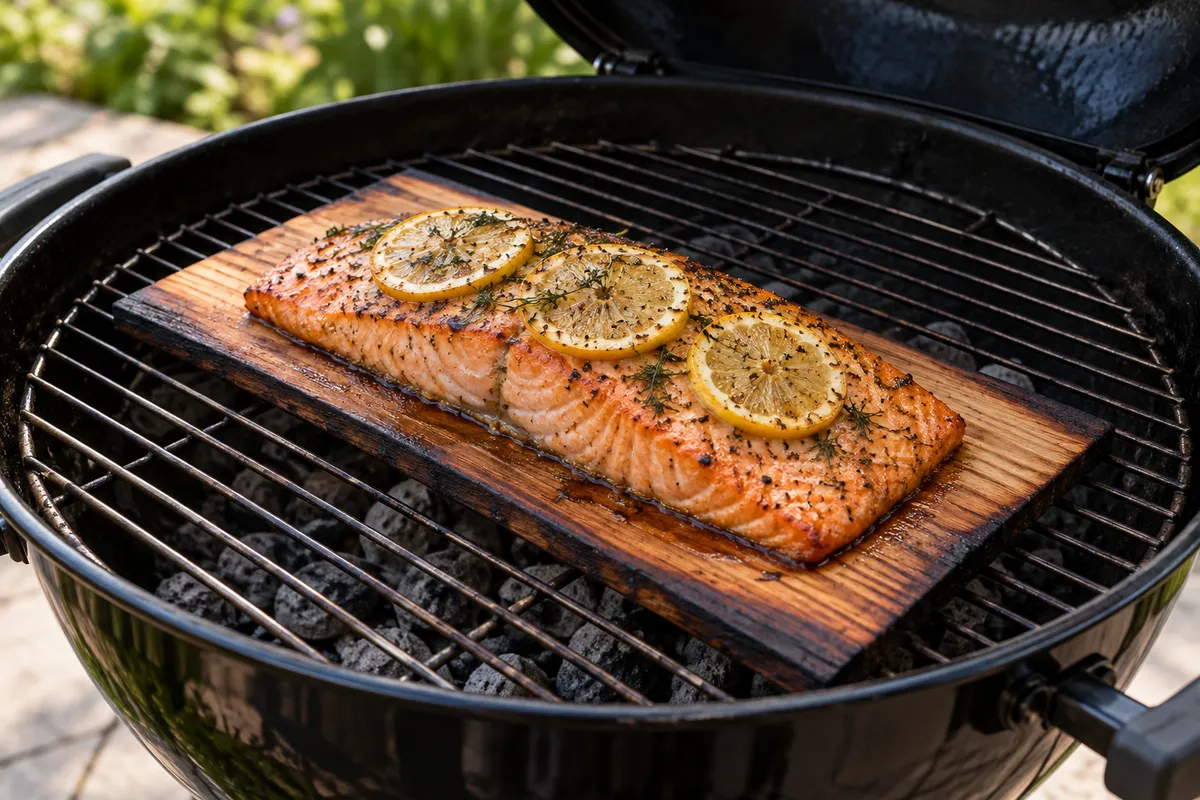
If soaking is specified, follow the stated method and duration. Wet wood can still burn, so soaking does not replace supervision or appropriate separation from fierce direct heat. Fit the food to the usable area without leaving delicate ends hanging over the edge. A plank that is too small defeats much of the protection you intended to gain.
Treat it as a cooking method, not a shield
Prepare a safe escape zone and heatproof landing area before starting. Follow the plank maker's recommended arrangement; a method for a particular kettle is not automatically suitable for every gas or electric grill. Watch the edges. Heavy charring or flames beneath the food are not necessary to create a useful flavor contribution.
In an approved indirect setup, a closed lid can help cook the upper surface. Measure the food's actual doneness with an appropriate thermometer. The wood may darken and smell strongly before a substantial fish fillet has finished cooking in the center. Neither smoke intensity nor a fixed number of minutes can establish that the food is ready to serve.
The board remains hot after removal
Lift it only with suitable tools and heat protection and place it on the prepared support. Do not carry it around like a cold serving board. Warn guests if it remains on the table, or transfer the food to a clean platter. A hot underside can damage furniture and table linens even when the top looks only lightly browned.
Let the wood cool completely in a safe location, then clean or discard it according to its instructions. Do not reuse a heavily charred, cracked or unhygienic plank. Afterward, consider whether the wood flavor actually improved the dish. A compatible metal plate may be simpler when the main objective is preventing delicate fish from sticking rather than adding a wood aroma.
Use grilling equipment only in its intended location and follow the manufacturer’s instructions. Timing is not a substitute for checking doneness.