Separate cooking from the pause afterward
In a thick cut, heat can continue moving inward from hotter outer layers. The amount of carryover depends on thickness, shape and the intensity of the preceding cook. It is not identical for every steak, so subtracting a fixed number from a safety target is unreliable. Measure the required temperature before removing the food rather than hoping for a particular later increase.
USDA guidance specifically requires a rest of at least three minutes after whole beef, pork, lamb and veal cuts reach 145°F. Ground versions still need 160°F, and poultry needs 165°F; their requirements should not be replaced with the whole-steak rule. Check several locations in irregular pieces. Thin slices behave differently after removal from a large, compact roast.
Protect the texture you created
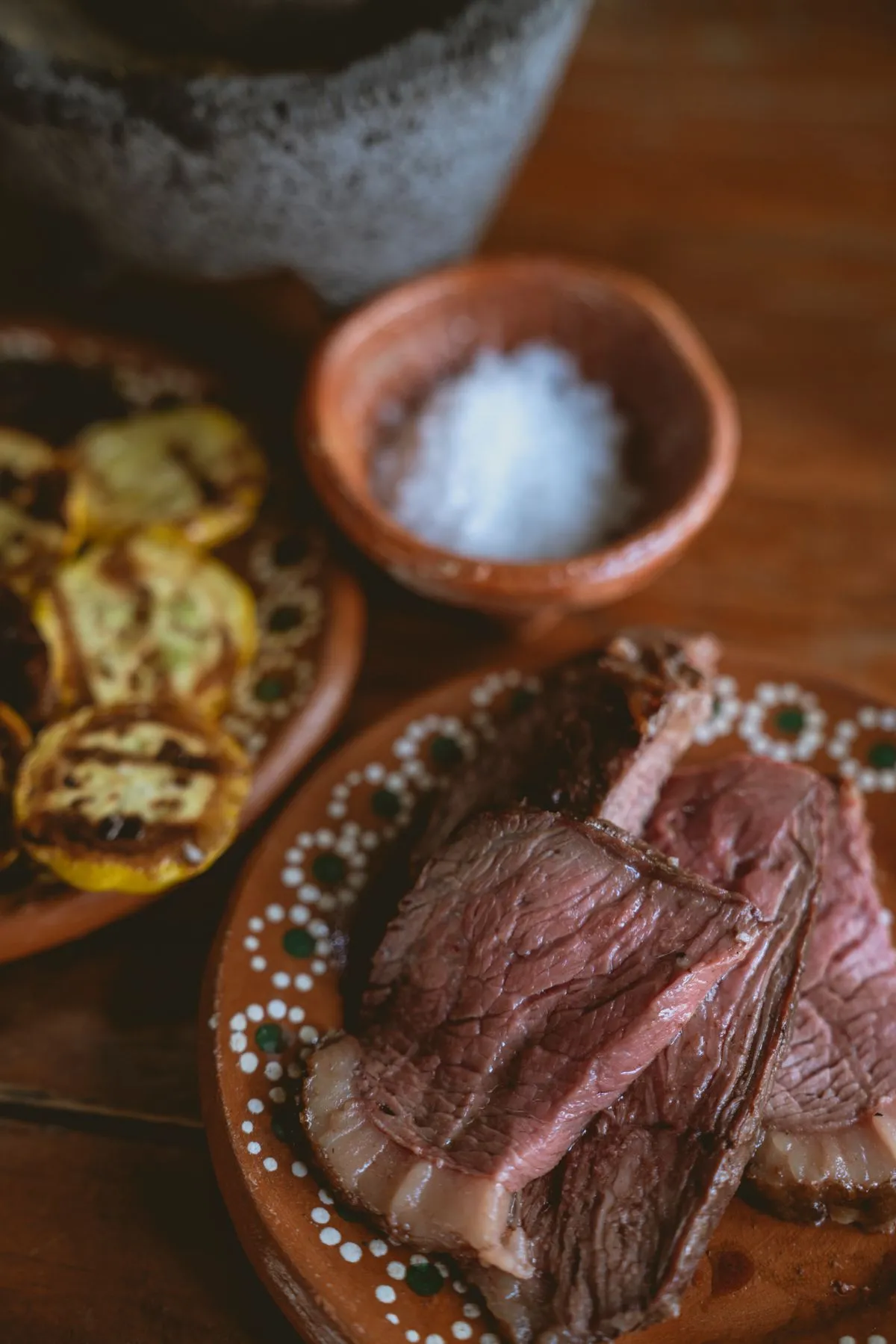
Place cooked meat on a clean platter that is warm rather than fiercely hot. Tight wrapping traps moisture and can soften a crisp exterior. A loose cover is an option when needed, but recognize that covered and uncovered resting produce different surface conditions. A single prescribed resting time for every size and shape is not especially useful.
Use the pause to set out sides and prepare a suitable knife. Do not carve a large piece into small slices far in advance of eating: the extra exposed area cools quickly. For a shared steak, slicing immediately before serving may work better than arranging individual plates well ahead of time. Cut across the grain where appropriate, rather than allowing the resting discussion to distract from carving technique.
Resting is not extended hot holding
A covered board on an outdoor table does not maintain a controlled holding temperature. If service is substantially delayed, use proper hot holding or a safe cooling plan. Keep finished meat away from raw supplies and use clean utensils. A well-cooked roast can still be contaminated by returning it to the tray that carried it before grilling.
After the meal, consider whether the pause suited the cut and the crust you wanted. Record that observation instead of applying an allegedly universal fraction of cooking time. Thin skewers, burgers and substantial roasts have different needs. The useful resting window depends on the particular food and when people will actually eat it.
Use grilling equipment only in its intended location and follow the manufacturer’s instructions. Timing is not a substitute for checking doneness.