Why the outside can mislead
Direct grill heat colors the surface quickly. A substantial chicken piece can look ready while a thick area beside the bone remains undercooked. In other circumstances, meat can retain pink color after reaching a suitable temperature. Neither a dark crust nor the absence of pink is a dependable replacement for measuring the food itself.
Check sensible locations rather than taking one convenient reading. The sensing area must sit inside the food, away from the grate, bone and metal skewers. A sideways insertion often works for thin foods when the probe is designed for that purpose. Allow the stated response time, and clean the instrument between undercooked portions and food that is ready to serve.
Use the correct US minimum
USDA minimums differ by food. Whole beef, pork, lamb and veal steaks, chops and roasts need 145°F, followed by at least three minutes of rest. Ground beef, pork, lamb and veal need 160°F. All poultry, including ground poultry, needs 165°F. Fish and shellfish need 145°F. Measure before removing food from the heat rather than counting on an uncertain later rise.
Do not apply a whole-steak recommendation to a burger or assume that a turkey burger follows the ground-beef figure. Mixed preparations need a target appropriate to every ingredient. Follow package directions where they specify handling or cooking requirements, particularly for stuffed, processed or apparently precooked frozen foods. A browned coating can conceal raw ingredients.
Tenderness requires a separate judgment
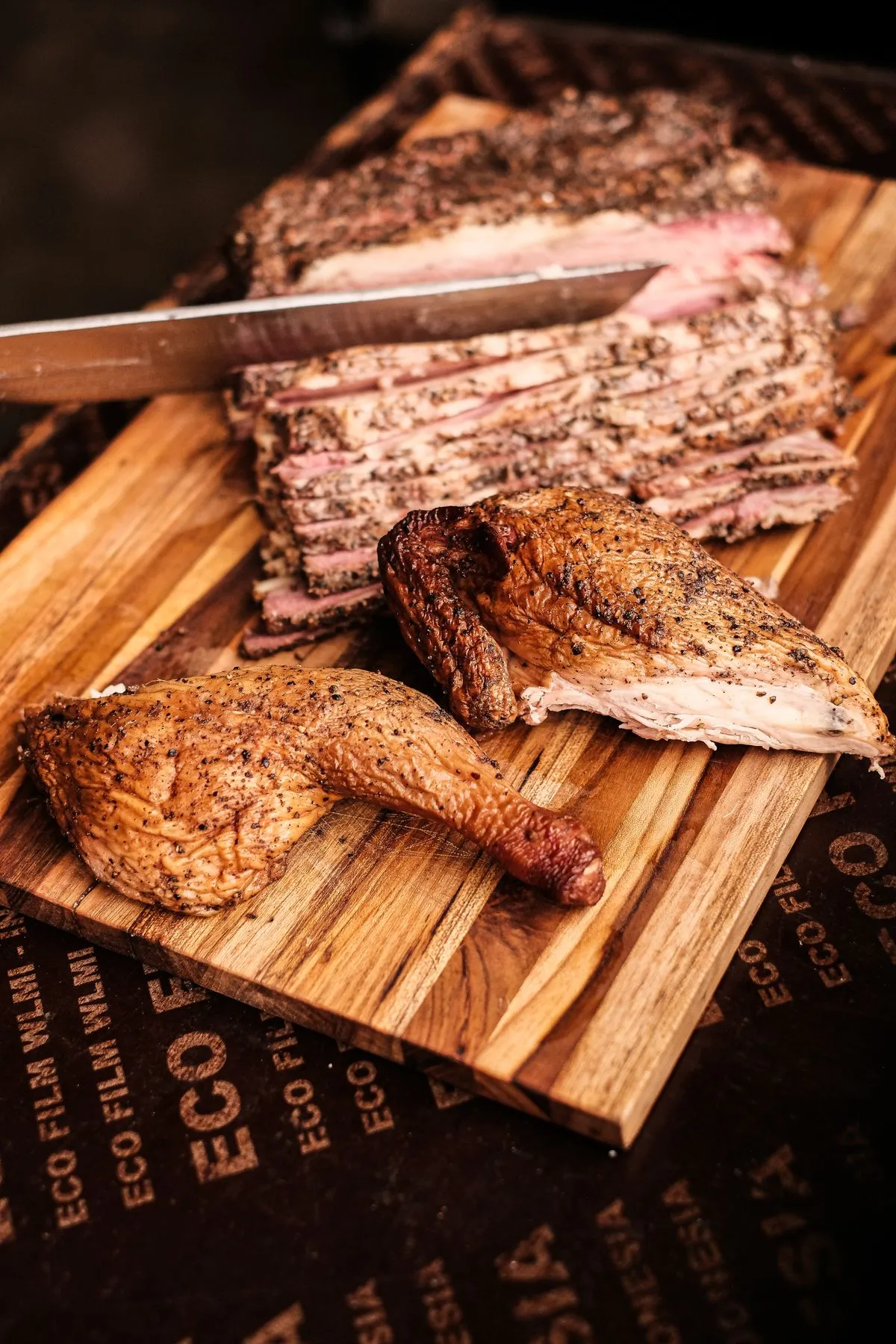
A tough roast may reach its minimum safety temperature before its connective tissue has softened enough for the intended dish. Pork shoulder and brisket therefore involve both a safety check and further cooking for texture. The reverse assumption is also unsafe: something that feels soft is not automatically thoroughly heated. Keep these two decisions separate.
If the exterior is already sufficiently browned, move the food to an appropriate indirect zone and continue cooking without interruption. Partially grilling meat, cooling it and finishing several hours later is not a safe shortcut. Plan the full cooking session or use a properly controlled complete cook-and-chill method instead of pausing in the middle of heating raw food.
Protect the food after cooking
Transfer finished food to a clean platter with clean utensils. Raw juices on the original tray can contaminate a properly cooked portion immediately. Keep hot food at 140°F or above when holding it, or refrigerate it promptly in shallow containers. Perishable food should not sit out longer than two hours, shortened to one hour above 90°F ambient temperature.
Set up the thermometer, clean landing area and cooking zones before guests arrive. Measurement then becomes an ordinary part of serving, not a last-minute obstacle. Children, pregnant people, older adults and people with weakened immunity need particular care with undercooked foods. A menu that can be cooked thoroughly and served promptly is easier to manage than several delicate low-temperature preparations competing for attention.
Use grilling equipment only in its intended location and follow the manufacturer’s instructions. Timing is not a substitute for checking doneness.