Start with a reproducible amount
For a first trial, consider roughly 0.8 to 1 percent salt by meat weight if the steak is not already seasoned or marinated. That means four to five grams for 500 grams of meat. This is a flavor starting point, not a preservation treatment. Use less when the finished dish includes salty butter, cheese or a strongly seasoned sauce.
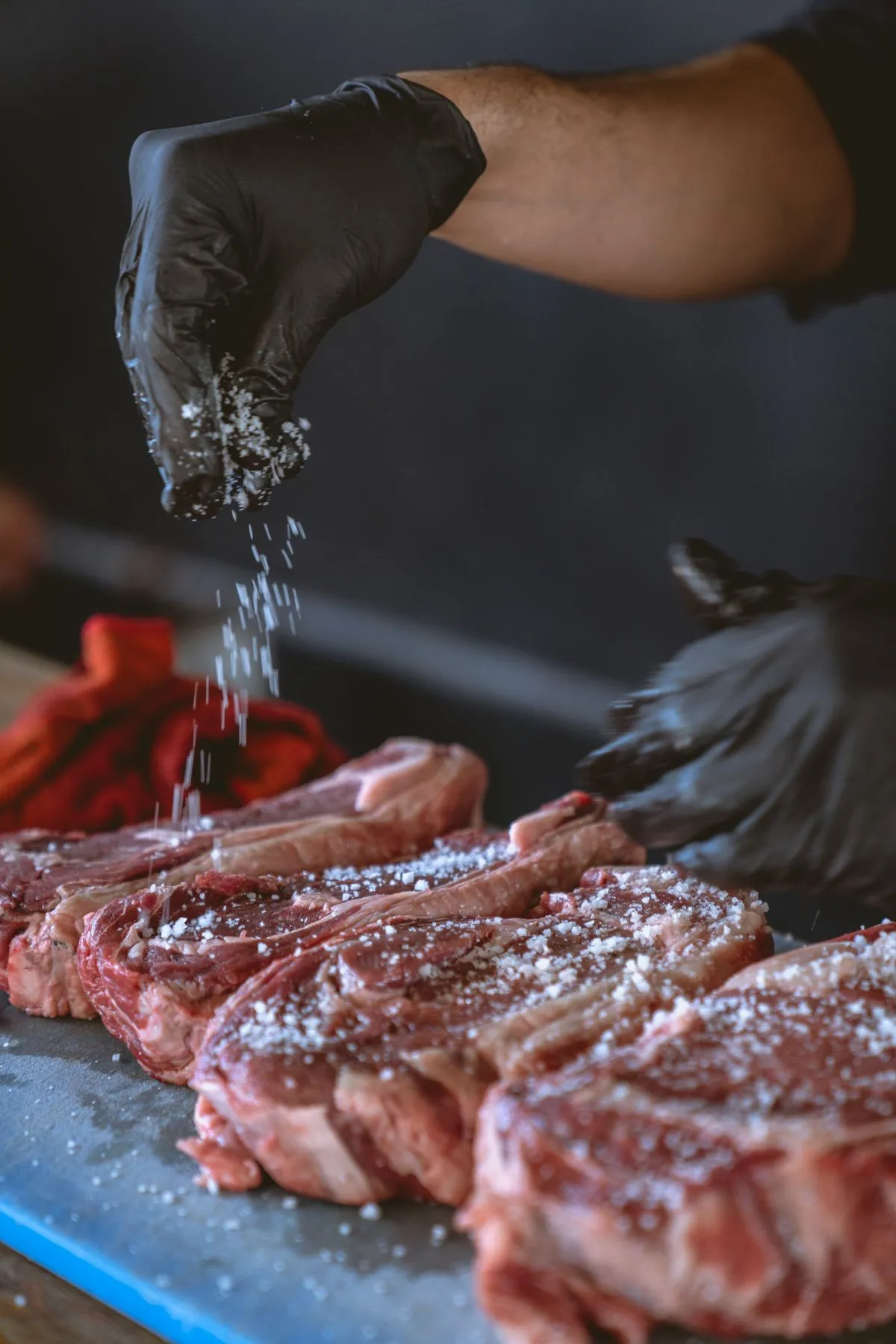
Weight is easier to compare than teaspoons because fine salt and large flakes have different densities. Distribute the measured amount across both faces and relevant edges. A concentrated patch will not automatically even out when you turn the steak. Do not rinse it after salting: that wets the surface again and adds unnecessary handling of raw meat around the sink.
Choose a timing that fits your evening
For advance salting, keep the meat refrigerated on a clean, appropriate support with a tray to catch liquid and protection from contact with other food. Its surface may initially become wet. Check before grilling and gently blot excess moisture rather than leaving the steak warm on the counter for an extended drying period. Cold storage remains part of the method.
With little preparation time, salt immediately before placing a dry-surfaced steak on the grill. Both approaches can be workable. Comparing them becomes difficult if you also change the salt quantity, steak thickness and cooking heat. Keep other conditions reasonably similar when experimenting so you can tell what the timing actually contributed to the result.
Finish the seasoning as a whole dish
Pepper, fresh herbs and butter can be added partly or entirely after grilling, particularly when the direct heat is fierce. This makes their contribution easier to control. Taste a small serving before adding more salt. A strongly seasoned sauce can make an otherwise balanced steak taste saltier than the same meat eaten on its own.
Salt does not make raw meat safe or justify longer unrefrigerated storage. Check doneness with an appropriate thermometer independently of the seasoning. If the measured method suits you, keep a brief note of meat weight and salt quantity. The purpose is a repeatable meal, not turning a straightforward dinner into an unnecessarily elaborate ritual.
Use grilling equipment only in its intended location and follow the manufacturer’s instructions. Timing is not a substitute for checking doneness.